


Jowls and a loose neck
Sagging along the jawline and neck that has become noticeable, often from the forties onward.
Facial plastic surgery
A facelift treats sagging in the lower face and along the jawline, while a neck lift addresses loose skin and bands below the chin; the two are often performed together. This page explains the main techniques, recovery in Istanbul and the limits of surgery.
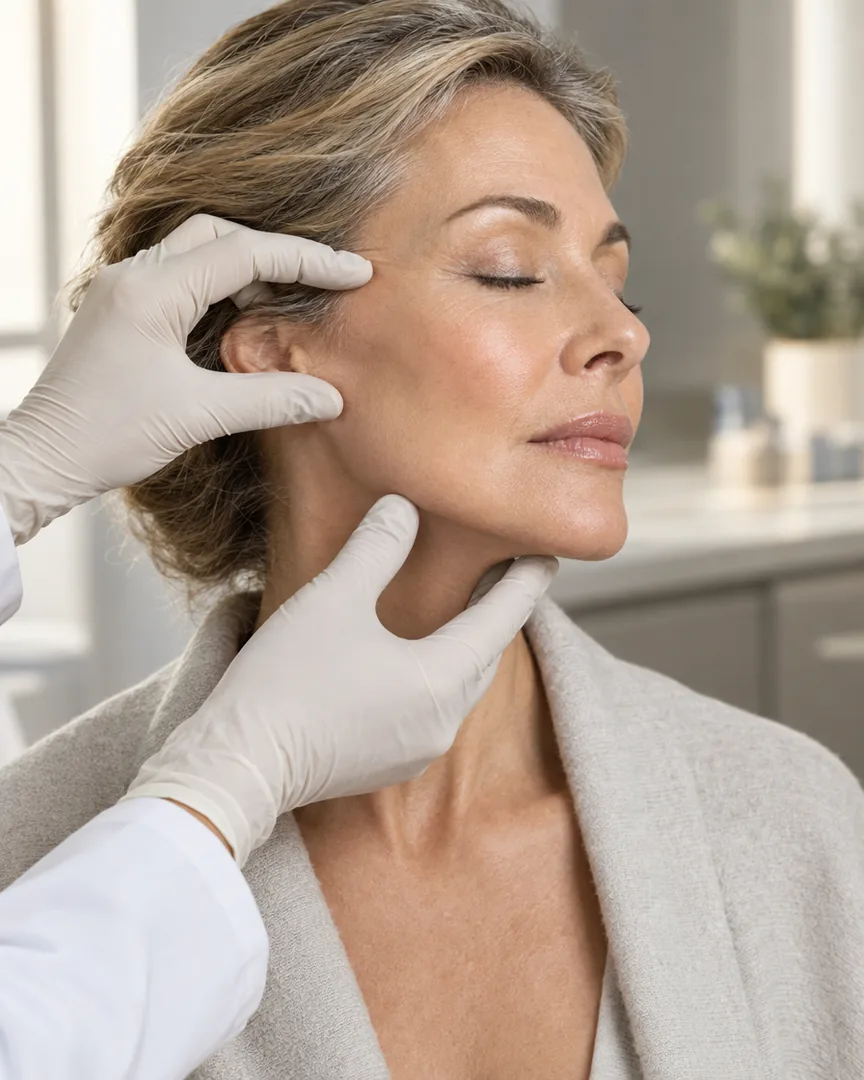
A facelift is surgery that lifts the deeper tissues of the lower face and neck and removes excess skin, often taking three to five hours under general anesthesia or sedation. Patients having a facelift in Turkey typically stay in Istanbul for ten to fourteen days. Most bruising settles within two to three weeks, while the result matures over months.
A facelift, or rhytidectomy, is a surgical procedure that lifts and repositions the deeper supporting tissues of the lower face and neck, then removes excess skin so it lies without tension. Lifting the deeper layer, rather than only pulling the skin, helps the result look natural and last.
The SMAS is the fibrous layer beneath the skin that supports the face. In a SMAS facelift the surgeon tightens or folds this layer; in a deep plane facelift the surgeon works beneath it and releases specific ligaments so the tissue moves as one unit. Both are established techniques, and the right one depends on your anatomy.
A mini facelift uses shorter incisions for early jowling in patients with good skin quality. A neck lift tightens the neck muscle and removes excess skin and fat through incisions under the chin and behind the ears. Some patients add eyelid surgery for a balanced refresh; all options are in our guide to plastic surgery in Turkey.
| SMAS facelift | Deep plane facelift | |
|---|---|---|
| Layer treated | SMAS tightened by folding or trimming it | Tissue released beneath the SMAS and moved as one unit |
| Often chosen for | Mild to moderate jowls and neck laxity | More pronounced sagging, including the midface |
| Operating time | Often shorter | Often longer and more technically demanding |
| Incisions | Around the ears, into the hairline | Similar placement around the ears |
Most people feel comfortable in public after two to three weeks, though subtle swelling, tightness and numbness can last a few months. A typical timeline:
Avoid sharp neck movements, heavy lifting and sun on the scars until your surgeon clears them. Our medical tourism guide explains transfers, accommodation and aftercare once you are back home.
A facelift is major surgery. Most side effects are temporary, but some complications need prompt treatment or further surgery, and your surgeon explains them in detail before you consent.
A collection of blood under the skin (hematoma) that may need draining, infection, poor healing or skin loss (more likely in smokers), widened scars, hair loss near the incisions and, rarely, facial nerve injury, which is usually temporary but can be permanent.
Longer operations followed by long-haul flights raise the risk of blood clots in the legs and lungs. Your surgeon assesses your personal risk, decides when you are fit to fly and may advise compression stockings, walking and fluids for the journey.
A facelift does not stop aging, change skin texture or remove fine lines around the eyes and mouth. Surgery is usually not advised if you cannot stop smoking or have uncontrolled blood pressure or a bleeding disorder. A consultation with a surgeon is the place to weigh these points honestly.
A facelift sets the clock back rather than stopping it, and many people are pleased with the change for years. How long results last depends on skin quality, genetics, sun exposure, smoking and weight stability. Some patients consider a smaller procedure many years later as natural aging continues.
Most patients plan ten to fourteen days in Istanbul. That covers the consultation and tests, surgery with an overnight stay, drain and stitch removal, and a final review before your surgeon confirms you are fit to fly. Combined procedures may need a longer stay.
The cost of a facelift in Turkey depends on the technique, whether a neck lift or other procedures are added, the length of anesthesia and hospital stay, and what is included, such as tests, accommodation and transfers. A personal quote follows the surgeon’s assessment of your photos and goals.
Not always. If sagging is mainly along the jawline, a facelift alone may be enough; if the concern is loose neck skin, fat under the chin or visible bands, a neck lift is often added. Many surgeons treat the lower face and neck together because they age as one unit.
A mini facelift uses shorter incisions to treat early jowling, usually with a quicker recovery. A full facelift addresses the lower face and neck more extensively and suits more advanced sagging. The better option depends on how much laxity you have, and your surgeon explains the trade-offs.
Incisions are usually placed in natural creases in front of and behind the ears, within the hairline and sometimes under the chin. Scars typically look pink at first and fade over months, and they are usually easy to conceal with hair, although healing varies between individuals.
Related
Medically reviewed by Plastic surgeon name, title · Written by the Hair Transplant Of The Turkey medical team · Last updated