


Wants more volume or balance
Smaller breasts, volume lost after pregnancy or weight change, or a clear size difference between sides.
Breast surgery
Breast augmentation adds volume and can improve shape and balance, most often with a silicone or saline implant chosen around your measurements, tissue and goals.
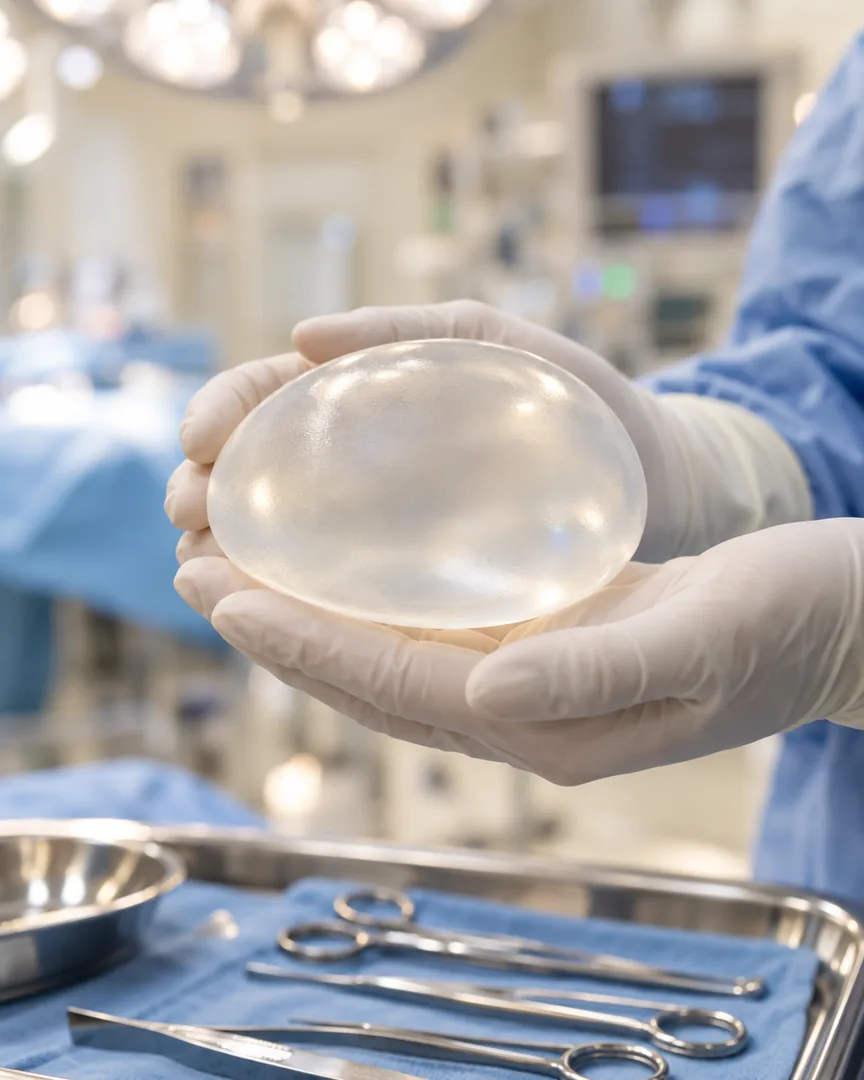
Breast augmentation is an operation that increases breast size or restores lost volume, usually with a silicone or saline implant placed behind the breast tissue or chest muscle. The surgery is typically done under general anesthesia and takes one to two hours. Most international patients stay in Istanbul for about a week before flying home.
Breast augmentation, also called augmentation mammaplasty, is an operation that enlarges the breasts by placing an implant, or less often transferred fat, beneath the existing tissue. An implant adds fullness and projection; it does not raise a low nipple or remove loose skin.
The most common incision sits in the crease beneath the breast, where the scar is usually well hidden; the areola edge or armpit are alternatives in selected cases. The implant goes above the chest muscle or partly beneath it, which can give more cover in slim patients.
If the breasts also sit low, a breast lift may be needed alongside or instead of implants. Fat transfer, which uses liposuction to harvest fat, usually gives a more modest increase. The plastic surgery overview shows how these options fit together.
| Feature | Silicone gel implants | Saline implants |
|---|---|---|
| Filling | Cohesive silicone gel, pre-filled | Sterile salt water, usually filled once in place |
| Feel | Often closer to natural breast tissue | Can feel firmer, especially with thin tissue |
| Incision | Slightly longer, as the implant is pre-filled | Can be shorter, as the shell is filled later |
| If the shell fails | Often silent; gel usually stays in the scar capsule | Deflates over days; the body absorbs the saline |
| Rippling | Less common | More likely in slim patients |
| Monitoring | Periodic ultrasound or MRI often advised | Visible deflation usually shows a rupture |
Most people return to light routines within about a week, while the implants take several months to settle into their final position.
Travel and follow-up from home are covered on the medical tourism page.
Every operation carries risk, and implants add some long-term considerations of their own. Your surgeon reviews your personal risk factors in consultation.
Implants are not lifetime devices, and many people need further surgery at some point to replace or remove them. Breast implant-associated anaplastic large cell lymphoma (BIA-ALCL) is a rare cancer of the immune system that can develop in the fluid or scar tissue around an implant, not in the breast tissue itself. Most reported cases involve textured implants and appear years later as swelling; removing the implant and capsule is usually the main treatment.
Implants can make mammograms harder to read, so tell the radiographer, who may take extra views. Many people breastfeed after augmentation, but this cannot be guaranteed.
Surgery and long-haul flights both raise the risk of blood clots in the legs or lungs, so your surgeon decides when you can fly. Augmentation is usually postponed during pregnancy, infection, uncontrolled illness or cancer treatment. To discuss your own situation, request a surgeon’s assessment.
The cost depends on the implant type, whether a lift or fat transfer is added, anesthesia, hospital time and how many nights you spend in Istanbul. Because every plan differs, the clinic does not quote a single price online; a personal quote follows the surgeon’s assessment of your photos and medical history.
Most patients plan to stay about five to seven days. That usually covers the consultation and tests, the operation, a night of observation where advised, and a wound check before flying. Your surgeon confirms the exact length of stay and when it is reasonable to fly, based on how you are healing.
Size is chosen from measurements such as chest width, breast base and tissue thickness, together with the look you want. Implants that are too large for the frame can raise the risk of stretching, rippling and malposition. Many surgeons use sizers during consultation so you can compare a range of options.
Breast implants are not designed to last a lifetime, but there is no fixed expiry date. Some people keep the same implants for many years, while others need surgery for rupture, capsular contracture or a change in size or shape. Silicone implants are often checked with ultrasound or MRI some years after surgery.
You are asleep during the operation. Afterwards, most people describe tightness and soreness rather than sharp pain, usually strongest over the first few days and greater when the implant sits beneath the muscle. Prescribed pain relief and a supportive bra help, and discomfort typically eases within one to two weeks.
The scar usually sits in the crease beneath the breast, where most bras and swimwear cover it. Other options are the lower edge of the areola or the armpit. Scars are pink at first, then typically flatten and fade over twelve months or more, but never disappear completely.
Related
Medically reviewed by Plastic surgeon name, title · Written by the Hair Transplant Of The Turkey medical team · Last updated